
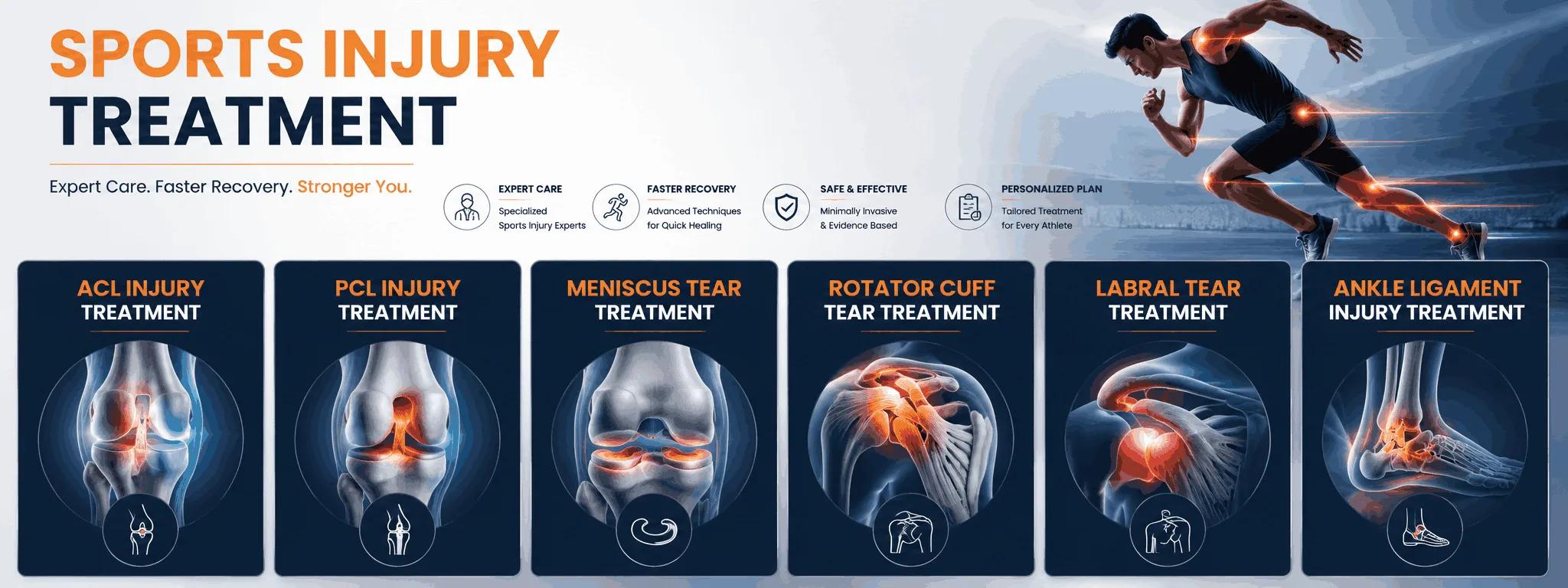
Understanding Rotator Cuff Tear Treatment
The rotator cuff is a group of four tendons that lift and rotate the shoulder and hold it centred. Tears range from small partial tears to large full-thickness ones, and cause pain — often worse at night — along with weakness reaching overhead.
Treatment is matched to the tear and to you. Many partial tears and older, less active patients do well with physiotherapy and injections, while larger tears, or younger active patients, usually benefit from arthroscopic repair to restore strength and prevent the tear enlarging.
Key benefits
- A plan matched to your tear size, age and activity level
- Non-surgical options for many partial tears
- Repair restores strength and can stop a tear enlarging
When Rotator Cuff Tear Treatment is recommended
How the procedure is performed
Diagnosis
Examination of strength and movement, with ultrasound or MRI to size and grade the tear.
Conservative care
Physiotherapy, activity change and a targeted injection help many partial tears.
Arthroscopic repair
Larger or symptomatic tears are re-attached to the bone with keyhole surgery and anchors.
Staged rehabilitation
A graded programme first restores movement, then rebuilds strength.
Preparation & prerequisites
- A detailed clinical examination and, where needed, imaging (X-ray, ultrasound or MRI) to confirm the exact cause.
- An honest discussion of every option — what surgery would and wouldn't achieve for you.
- A tailored physiotherapy and activity-modification plan you can start straight away.
- Clear goals and review points so progress can be measured and the plan adjusted.
What recovery looks like
Weeks 0–6
If repaired, a sling protects the tendon while gentle guided movement begins.
Weeks 6–12
Active movement and light strengthening are introduced as the tendon heals.
Months 3–6
Strength is progressively rebuilt for a full return to activity.
How to recover well
- Stay consistent with your prescribed exercises — they are what drive your recovery.
- Modify or pause activities that clearly aggravate symptoms while the tissue settles.
- Use ice and simple pain relief for flare-ups, and pace your return to activity.
- Keep your follow-up appointments so the plan can be progressed or changed as you improve.
Risks, safety & outcomes
In experienced hands this is a very safe procedure, and serious problems are uncommon. Every step is taken to minimise risk — but being fully informed is part of good care. Possible risks include:
- A repaired tendon can occasionally re-tear, more so with larger tears
- Temporary stiffness, reduced with guided early movement
- The usual small surgical risks when repair is chosen
Results & outlook
Most patients gain reliable relief of pain — especially night pain — and, after repair and rehabilitation, regain strong, functional use of the shoulder. Treating a tear appropriately can also stop it enlarging over time.
Frequently asked questions
Tendon tears don't reliably heal without repair, but symptoms from partial tears can often be managed successfully without surgery.