
Understanding Labral Tear Treatment
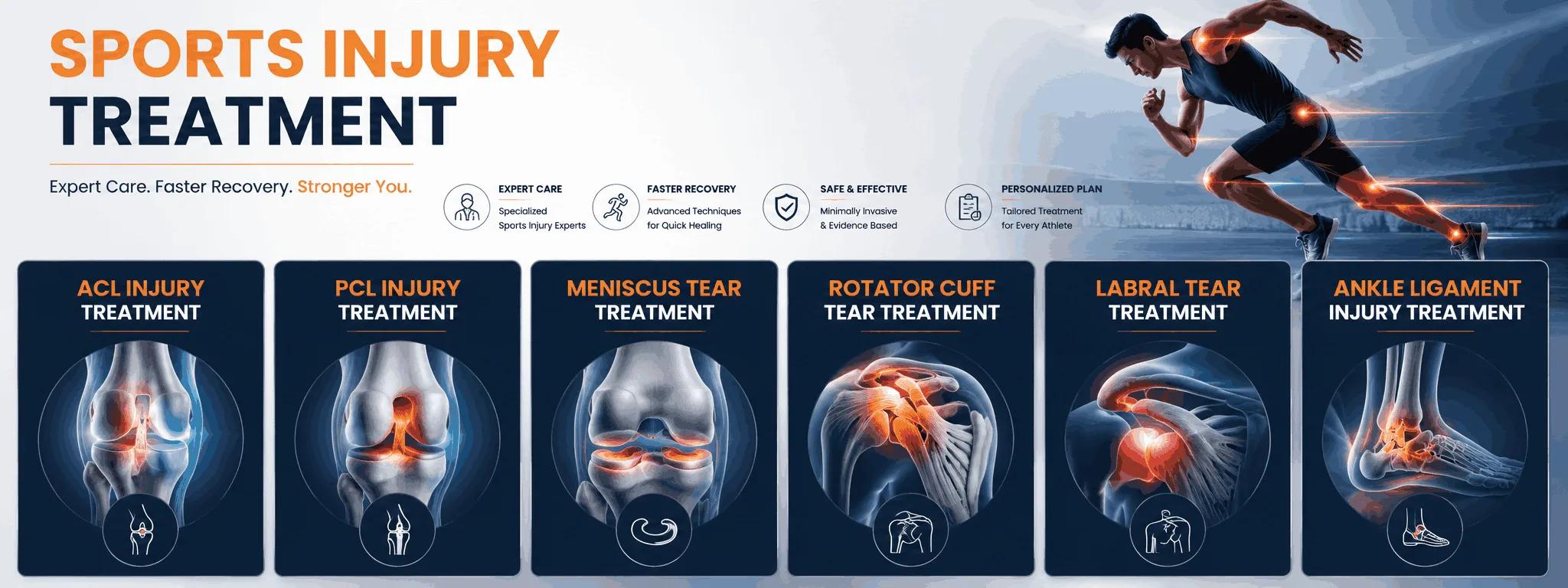
The labrum is a rim of cartilage that deepens the shoulder socket and helps keep the ball centred. Tears — such as SLAP tears at the top or Bankart tears at the front after a dislocation — can cause pain, clicking, and a shoulder that feels unstable.
Arthroscopic repair re-attaches the torn labrum with tiny anchors, restoring the socket's depth and the shoulder's stability. With staged rehabilitation, patients can return confidently to overhead and contact activities.
Key benefits
- Restores shoulder stability and reduces re-dislocation risk
- Relieves pain and mechanical clicking
- Keyhole repair with secure suture anchors
When Labral Tear Treatment is recommended
How the procedure is performed
Assessment
The labral tear pattern and any associated damage are confirmed arthroscopically.
Preparation
The bone edge is prepared so the repaired labrum can heal firmly back onto it.
Anchor repair
The labrum is re-attached with small suture anchors to restore the socket and stability.
Protection
A sling protects the repair during the early healing phase.
Preparation & prerequisites
- A detailed clinical assessment and review of your scans (X-ray / MRI) to confirm the diagnosis and plan the surgery precisely.
- Routine pre-operative blood tests, an ECG if needed, and a fitness-for-anaesthesia check by the anaesthetist.
- Stopping blood-thinning medication (such as aspirin or clopidogrel) only if advised, and disclosing every medicine and supplement you take.
- Fasting for around 6 hours before surgery, and arranging a responsible adult to drive you home and stay with you the first night.
- Preparing your home for recovery — ice packs, loose clothing, and a clear path free of trip hazards.
What recovery looks like
Weeks 0–4
A sling protects the repair while gentle assisted movement begins.
Weeks 4–12
Range of motion and strengthening progress steadily under guidance.
Months 3–6
Overhead and contact activity resume in carefully staged steps.
How to recover well
- Follow the RICE principle early — rest, ice 15–20 minutes several times a day, gentle compression and elevation to control swelling.
- Take pain relief as prescribed rather than waiting for pain to build, and keep the wound clean and dry.
- Attend every physiotherapy session and do your home exercises — rehabilitation is as important as the surgery itself.
- Progress activity gradually and don't return to sport until you're formally cleared, to protect the repair.
- Watch for warning signs — spreading redness, fever, calf pain or increasing swelling — and call us if they appear.
Risks, safety & outcomes
In experienced hands this is a very safe procedure, and serious problems are uncommon. Every step is taken to minimise risk — but being fully informed is part of good care. Possible risks include:
- Some stiffness that resolves with rehabilitation
- Recurrence of instability, more likely if returning to sport too soon
- The usual small arthroscopic surgical risks
Results & outlook
Labral repair reliably restores stability for most patients, relieving pain and clicking and enabling a confident return to sport when rehabilitation milestones are met.
Frequently asked questions
The labrum is a cartilage rim that deepens the shoulder socket. Tears such as SLAP or Bankart lesions can cause pain, clicking and instability.