
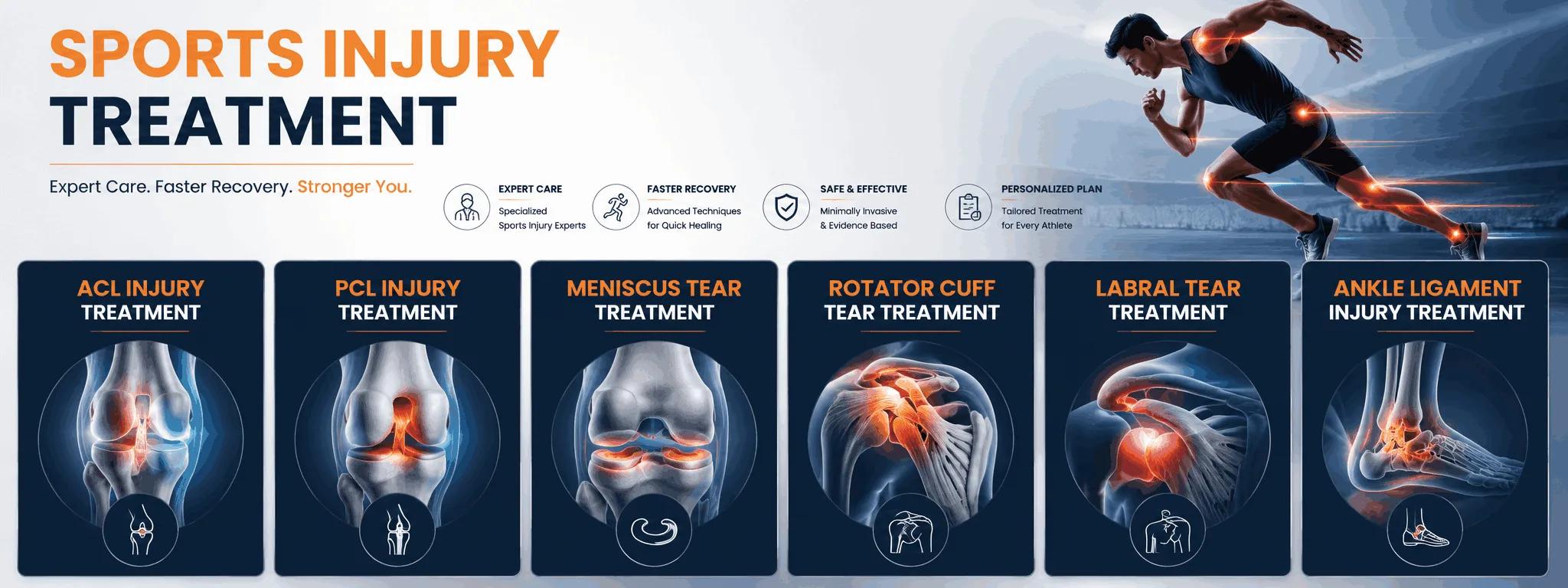
Understanding ACL Injury Treatment
An ACL injury doesn't automatically mean surgery. The right treatment depends on how unstable the knee is, what sports and activities you want to return to, and whether other structures such as the meniscus are also injured.
Care is individualised: some people — particularly those with lower physical demands — do well with a focused rehabilitation programme, while athletes and those with a knee that gives way usually benefit from arthroscopic reconstruction. The goal is always the least intervention that reliably gets you back to the life and sport you want.
Key benefits
- A plan matched to your goals, not a one-size-fits-all approach
- Avoids unnecessary surgery where rehabilitation will succeed
- Clear return-to-sport milestones and testing
When ACL Injury Treatment is recommended
How the procedure is performed
Accurate diagnosis
Clinical stability tests (such as Lachman) and an MRI confirm the tear and check the meniscus and cartilage.
Shared decision
Your goals, sport and lifestyle are discussed openly to choose between rehabilitation and reconstruction.
Structured rehabilitation
A progressive programme rebuilds strength, balance and neuromuscular control of the knee.
Reconstruction if needed
For instability or high sporting demand, arthroscopic ACL reconstruction restores stability.
Preparation & prerequisites
- A detailed clinical examination and, where needed, imaging (X-ray, ultrasound or MRI) to confirm the exact cause.
- An honest discussion of every option — what surgery would and wouldn't achieve for you.
- A tailored physiotherapy and activity-modification plan you can start straight away.
- Clear goals and review points so progress can be measured and the plan adjusted.
What recovery looks like
Early
Settle swelling, restore full movement and reactivate the quadriceps and hamstrings.
Mid
Progressive strengthening and balance work rebuild control and confidence.
Late
Sport-specific training and objective testing guide a safe return to activity.
How to recover well
- Stay consistent with your prescribed exercises — they are what drive your recovery.
- Modify or pause activities that clearly aggravate symptoms while the tissue settles.
- Use ice and simple pain relief for flare-ups, and pace your return to activity.
- Keep your follow-up appointments so the plan can be progressed or changed as you improve.
Risks, safety & outcomes
In experienced hands this is a very safe procedure, and serious problems are uncommon. Every step is taken to minimise risk — but being fully informed is part of good care. Possible risks include:
- Persisting instability if a knee that needs surgery is managed with rehab alone
- Further meniscus or cartilage damage if giving-way continues
- The usual small surgical risks if reconstruction is chosen
Results & outlook
With the right pathway, most people return to their desired activities. Choosing rehabilitation or surgery based on your specific knee and goals gives the best long-term result and protects the joint from further damage.
Frequently asked questions
The ligament itself doesn't reliably re-heal, but many people function well with rehabilitation. Athletes and unstable knees usually do better with reconstruction.