
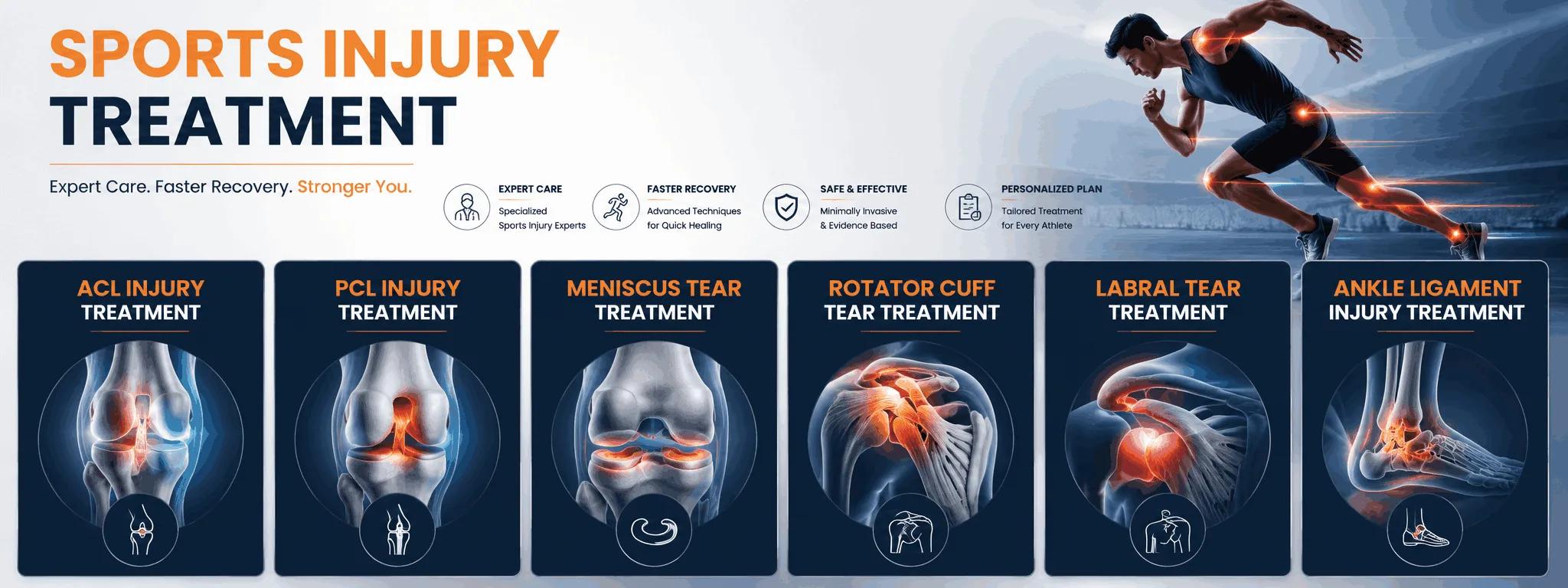
Understanding PCL Injury Treatment
Posterior cruciate ligament injuries are often managed successfully without surgery. Because the PCL has some natural healing capacity and is supported by strong surrounding muscles, a well-designed rehabilitation programme restores function for many people.
Treatment is chosen after carefully grading the injury and checking for damage to other ligaments. Higher-grade or combined injuries, or a knee that stays unstable, may need reconstruction — but for most isolated injuries, targeted strengthening is the mainstay.
Key benefits
- Avoids surgery for the many injuries that recover with rehab
- Quadriceps-focused programme that supports the knee
- Clear criteria for when surgery would help
When PCL Injury Treatment is recommended
How the procedure is performed
Grading
The injury is graded and any associated ligament or cartilage damage identified with examination and MRI.
Bracing & rehab
Many isolated PCL injuries are managed with a supportive brace and a targeted rehabilitation programme.
Strengthening
Quadriceps-focused strengthening stabilises and protects the knee as it heals.
Surgery if needed
Reconstruction is considered for high-grade, combined or persistently unstable injuries.
Preparation & prerequisites
- A detailed clinical examination and, where needed, imaging (X-ray, ultrasound or MRI) to confirm the exact cause.
- An honest discussion of every option — what surgery would and wouldn't achieve for you.
- A tailored physiotherapy and activity-modification plan you can start straight away.
- Clear goals and review points so progress can be measured and the plan adjusted.
What recovery looks like
Early
Protect the knee, control swelling and begin quadriceps activation.
Mid
Progressive strengthening restores stability and function.
Late
Return to activity guided by strength and control milestones.
How to recover well
- Stay consistent with your prescribed exercises — they are what drive your recovery.
- Modify or pause activities that clearly aggravate symptoms while the tissue settles.
- Use ice and simple pain relief for flare-ups, and pace your return to activity.
- Keep your follow-up appointments so the plan can be progressed or changed as you improve.
Risks, safety & outcomes
In experienced hands this is a very safe procedure, and serious problems are uncommon. Every step is taken to minimise risk — but being fully informed is part of good care. Possible risks include:
- Residual laxity that may need reconstruction if symptoms persist
- Missed combined injuries if not assessed thoroughly — hence careful grading
- The usual small surgical risks if reconstruction is chosen
Results & outlook
Most isolated PCL injuries recover well with dedicated rehabilitation, returning people to sport and activity. Careful grading ensures the smaller number that need surgery are identified and treated appropriately.
Frequently asked questions
Often not — many isolated PCL injuries do very well with a brace and rehabilitation. Surgery is reserved for severe or combined injuries.