
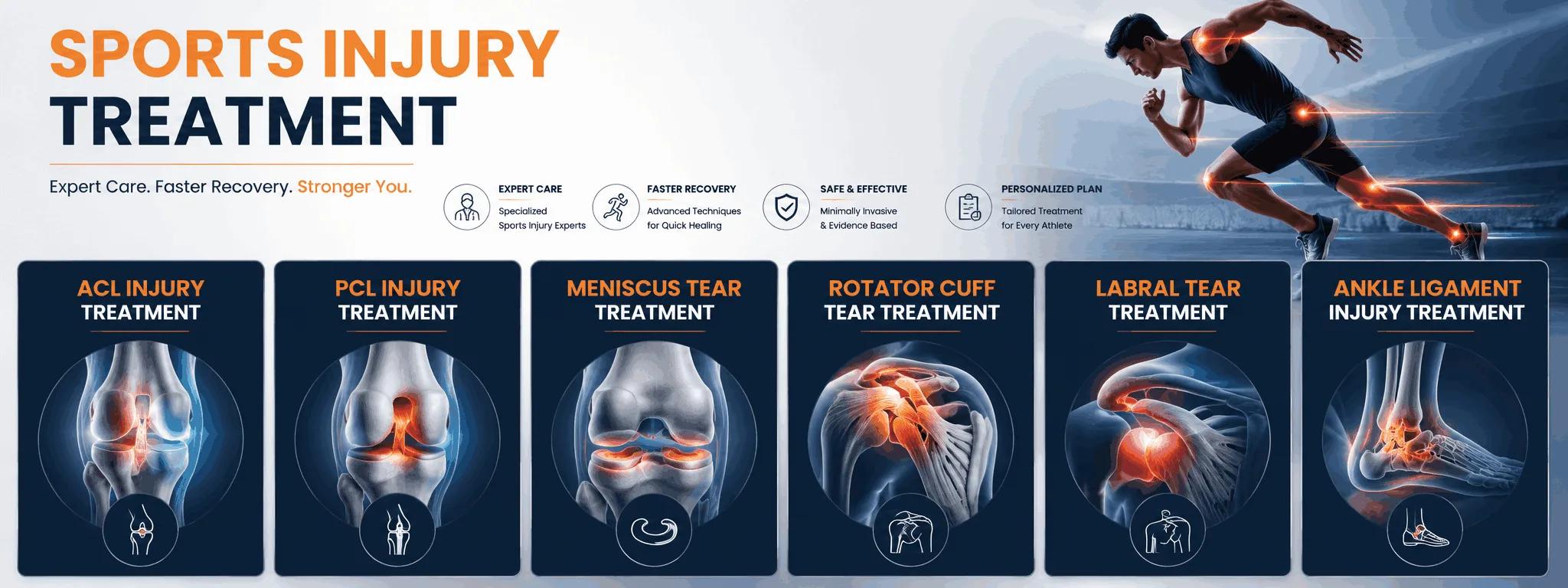
Understanding Meniscus Tear Treatment
Not every meniscus tear needs surgery. Many stable tears — especially degenerate ones in older knees — settle well with physiotherapy, activity modification and time, avoiding an operation altogether.
When surgery is needed, the priority is to preserve the meniscus: suitable tears are repaired, and only irreparable tears are carefully trimmed. Matching the treatment to the tear type, its location and your symptoms gives the best result for your knee's long-term health.
Key benefits
- Avoids surgery for stable tears that settle with rehab
- Preserves the meniscus wherever a repair is possible
- A clear, evidence-based plan for your specific tear
When Meniscus Tear Treatment is recommended
How the procedure is performed
Assessment
Examination and MRI define the tear pattern, size, location and whether it is repairable.
Non-surgical first
Stable and degenerate tears are often managed with physiotherapy and activity modification.
Arthroscopic repair
Suitable tears are stitched to preserve the meniscus and protect the knee long term.
Selective trimming
Irreparable tears causing mechanical symptoms are carefully trimmed, saving as much meniscus as possible.
Preparation & prerequisites
- A detailed clinical examination and, where needed, imaging (X-ray, ultrasound or MRI) to confirm the exact cause.
- An honest discussion of every option — what surgery would and wouldn't achieve for you.
- A tailored physiotherapy and activity-modification plan you can start straight away.
- Clear goals and review points so progress can be measured and the plan adjusted.
What recovery looks like
Early
Reduce swelling and restore comfortable movement.
Mid
Rebuild strength and control; any repair is protected with restricted loading.
Late
Graduated return to sport once symptoms and strength allow.
How to recover well
- Stay consistent with your prescribed exercises — they are what drive your recovery.
- Modify or pause activities that clearly aggravate symptoms while the tissue settles.
- Use ice and simple pain relief for flare-ups, and pace your return to activity.
- Keep your follow-up appointments so the plan can be progressed or changed as you improve.
Risks, safety & outcomes
In experienced hands this is a very safe procedure, and serious problems are uncommon. Every step is taken to minimise risk — but being fully informed is part of good care. Possible risks include:
- A repaired tear occasionally fails to heal and needs further treatment
- Ongoing symptoms if a degenerate knee has underlying wear
- The usual small surgical risks when an operation is chosen
Results & outlook
Many tears settle without surgery. When surgery is needed, preserving the meniscus protects the knee against future arthritis, and most people return to their activities within weeks to a few months.
Frequently asked questions
No — many settle with rehabilitation. Surgery is considered for locking, persistent pain, or a repairable tear in an active patient.