
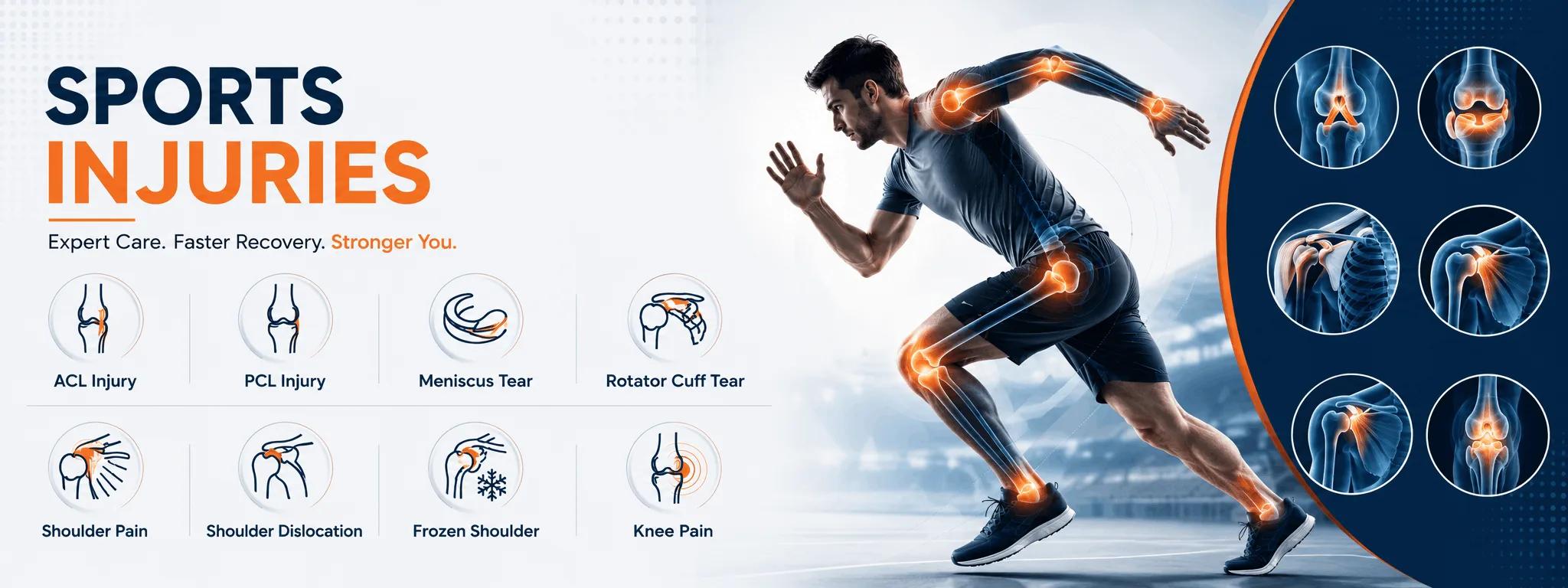
Understanding ACL Injury
The anterior cruciate ligament (ACL) is a key stabiliser in the centre of the knee. An ACL injury — usually a tear — most often happens during a sudden twist, pivot or awkward landing, and is one of the most common serious knee injuries in sport.
Many people feel or hear a 'pop', followed by rapid swelling and a knee that feels unstable. Because a torn ACL doesn't heal back together, the injury needs proper assessment to decide between rehabilitation and reconstruction, and to protect the meniscus and cartilage from further damage.
Symptoms to look for
Causes & risk factors
- Sudden stopping, pivoting or changing direction
- Awkward landing from a jump
- A direct blow to the knee in contact sport
- Higher risk in sports such as football, basketball and skiing
How it's diagnosed
Specific stability tests such as the Lachman and pivot-shift tests.
MRI to confirm the ACL tear and check for meniscus or cartilage injury.
Assessment of your activity goals to plan the right treatment.
What happens if it's left untreated
- Repeated giving-way that damages the meniscus and cartilage
- Early wear (osteoarthritis) from ongoing instability
- Reduced confidence and inability to return to pivoting sport
How we treat it
What to expect
Recovery depends on whether the knee is managed with rehabilitation or reconstruction. With surgery, return to sport is typically around 6–9 months, guided by objective strength and control tests rather than time alone.
How to protect yourself
Frequently asked questions
The ligament itself doesn't reliably re-heal, but many people function well with rehabilitation. Athletes and unstable knees usually do better with reconstruction.