Understanding Tendon Injuries
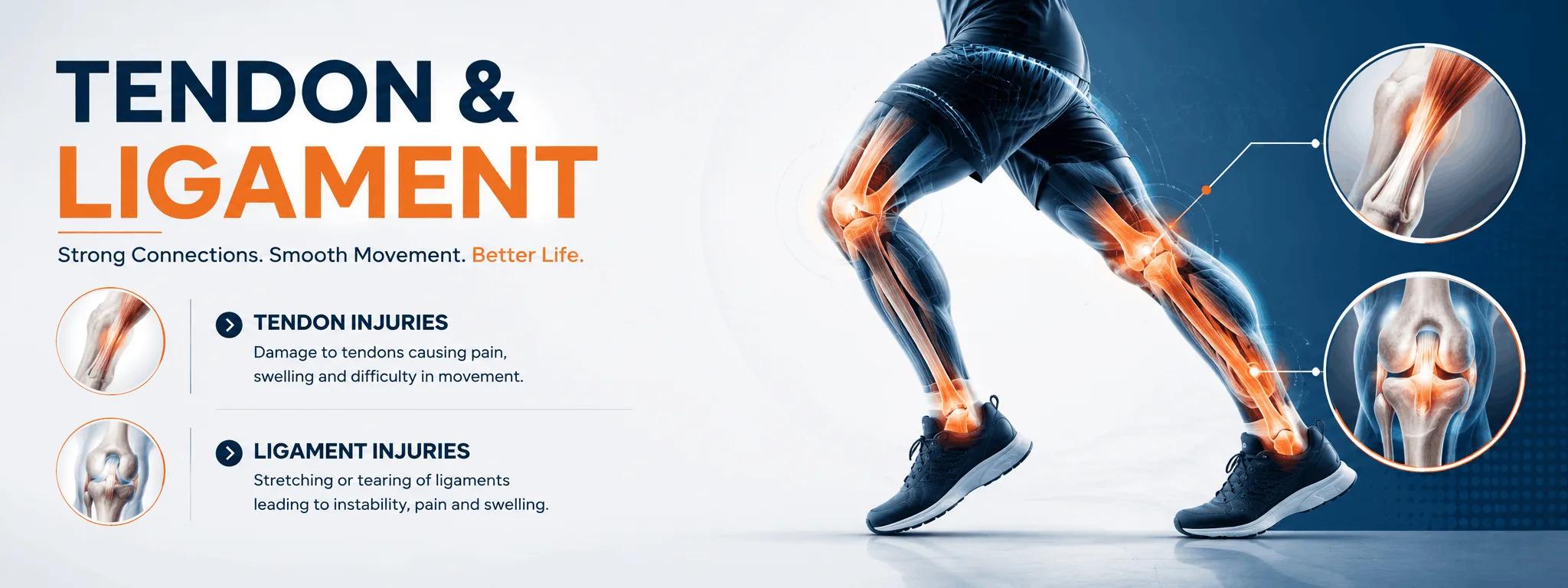
Tendons connect muscle to bone and transmit the force that moves your joints. Tendon injuries range from overuse tendinitis (inflammation and irritation) to partial and complete tears, and commonly affect the shoulder, knee and ankle.
Most tendon problems respond well to a structured, progressive loading programme, sometimes supported by injections. Significant tears may need repair, followed by staged rehabilitation to rebuild strength.
Symptoms to look for
Causes & risk factors
- Repetitive overuse or a sudden increase in training
- Age-related tendon degeneration
- An acute injury or forceful overload
- Poor technique or inadequate warm-up
How it's diagnosed
Examination to localise the affected tendon and test its strength.
Ultrasound or MRI when a tear is suspected.
What happens if it's left untreated
- Progression from tendinitis to a partial or complete tear
- Chronic pain and weakness if overload continues
- Compensating patterns that strain other areas
How we treat it
What to expect
Most tendon problems settle with a graded loading programme over several weeks to months. Significant tears may need repair followed by staged rehabilitation to restore strength.
How to protect yourself
Frequently asked questions
Overuse tendinitis often improves over weeks to months with the right loading programme; tears take longer to recover.