
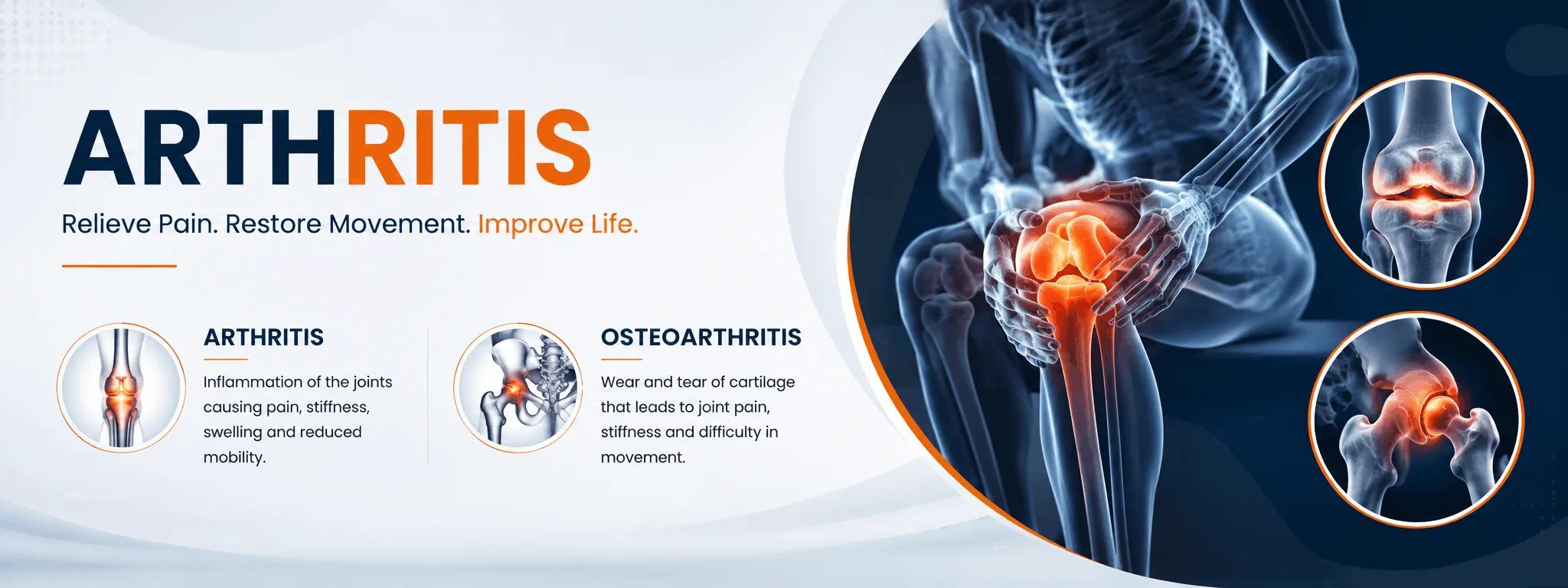
Understanding Osteoarthritis
Osteoarthritis is the most common form of arthritis — the gradual wearing away of the smooth cartilage that caps the ends of bones, most often in the knee, hip and shoulder. As the cushion thins, the joint becomes painful, stiff and less mobile.
It develops slowly over years and is influenced by age, previous injury, alignment and load. Treatment focuses on relieving pain and preserving function, with surgery reserved for advanced, disabling disease that hasn't responded to other measures.
Symptoms to look for
Causes & risk factors
- Age-related cartilage wear
- Previous injury or joint malalignment
- Increased load on the joint over many years
- A family tendency in some people
How it's diagnosed
Clinical examination of movement, alignment and tenderness.
Weight-bearing X-rays to grade the degree of cartilage loss.
What happens if it's left untreated
- Progressive pain and loss of walking distance
- Deformity or instability in advanced disease
- Muscle weakness from reduced activity
How we treat it
What to expect
Non-surgical measures manage most osteoarthritis for years. When the joint is severely worn and pain limits daily life, replacement provides lasting pain relief and restored function.
How to protect yourself
Frequently asked questions
No — replacement is for advanced disease. Earlier stages are managed with non-surgical and joint-preserving options.