
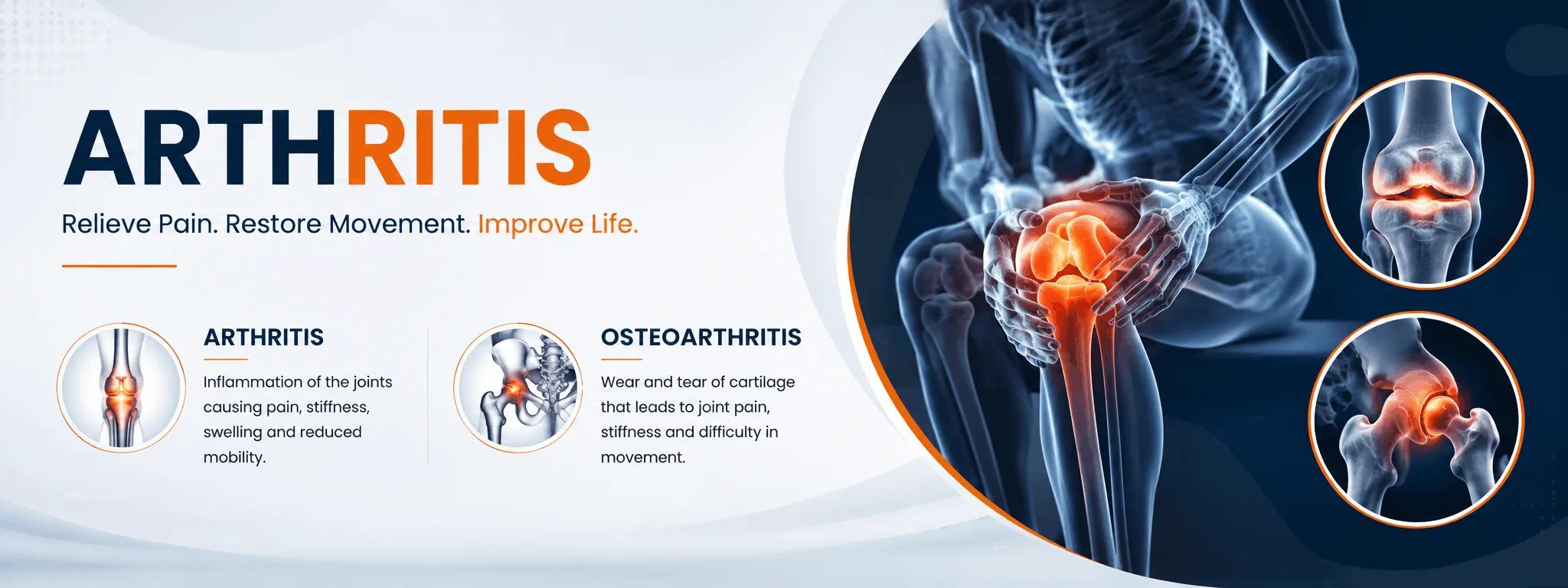
Understanding Arthritis
Arthritis is damage to the smooth cartilage surface of a joint, causing pain, stiffness, swelling and reduced movement. It can result from age-related wear (osteoarthritis), previous injury, or inflammatory conditions.
There is a wide range of treatment — from lifestyle measures, medication and injections through to joint-preserving and replacement surgery. The right approach depends on the stage of the arthritis and the joint involved, and most people are managed without surgery for a long time.
Symptoms to look for
Causes & risk factors
- Age-related cartilage wear
- Previous joint injury or surgery
- Inflammatory joint conditions
- Extra load on the joint over many years
How it's diagnosed
Clinical examination of the affected joint's movement and alignment.
X-rays to assess the degree of cartilage loss and joint change.
What happens if it's left untreated
- Progressive loss of movement and function
- Deformity or instability in advanced disease
- Reduced independence and quality of life
How we treat it
What to expect
Early arthritis is managed to relieve pain and preserve function, often for many years. When the joint is severely worn, replacement offers durable, reliable pain relief and restored movement.
How to protect yourself
Frequently asked questions
No — many people are managed for years with lifestyle measures, medication and injections. Surgery is for advanced, disabling disease.