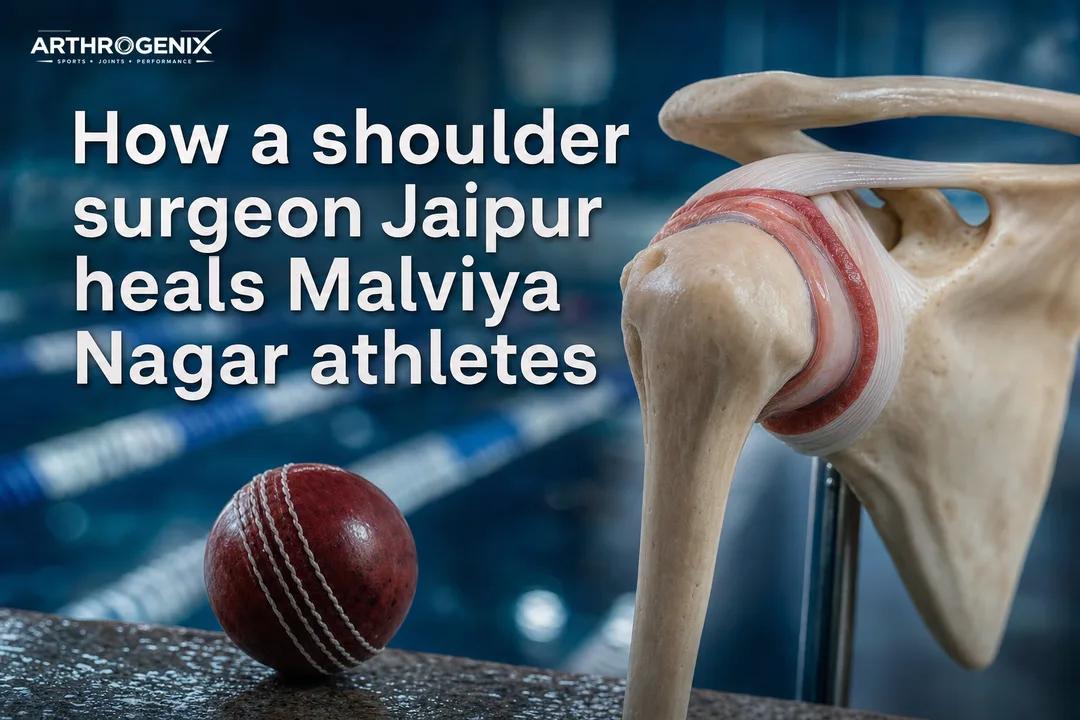
How a shoulder surgeon Jaipur heals Malviya Nagar athletes comes down to accurate diagnosis, minimally invasive care, and sport-specific rehab. At ArthroGenix in Jaipur, we see local cricketers, swimmers, volleyball players, and gym-goers every week, and we guide them from pain to performance with a clear, stepwise plan.
The demands on Malviya Nagar athletes: why shoulders get hurt
Malviya Nagar’s training grounds, clubs, and gyms create a thriving sports culture. However, overhead motions load the shoulder complex in ways that many athletes underestimate. Repeated force at end range stresses the rotator cuff, labrum, and biceps anchor while the shoulder blade muscles try to stabilize the joint.
In our clinic, patterns repeat. Throwers and servers arrive with posterior shoulder tightness and cuff tendinopathy. Meanwhile, contact athletes present with instability after a fall or tackle. Importantly, small technique errors or rapid training spikes often trigger big symptoms.
Because the shoulder relies on dynamic control more than bony stability, minor imbalances can snowball. For instance, a stiff thoracic spine changes arm slot and increases shear on the labrum. As a result, athletes feel deep pain, clicking, or loss of power. Addressing the real driver, not just the sore spot, is the key.
How a shoulder surgeon Jaipur assesses, images, and explains findings
Fast, precise diagnosis builds trust and saves seasons. First, we take a sport-specific history: position, volume, recent load changes, and previous injuries. Then we run functional tests that mimic the athlete’s demands. Consequently, we catch issues that a basic exam might miss.
What to expect in your first visit and exam
Expect a structured flow. We check shoulder range, strength in different planes, scapular control, and core involvement. We compare right and left sides under light load. In addition, we assess the neck and thoracic spine to rule out referred pain.
If imaging is warranted, we start with X-rays to assess bone and joint space. For soft tissue, ultrasound or MRI-arthrogram clarify rotator cuff quality, labral integrity, and biceps anchor status. We explain images in plain language so you leave with clarity, not confusion.
Return-to-play criteria and strength benchmarks
Clear checkpoints prevent setbacks. Typically, you must achieve pain-free range, symmetric rotator cuff and scapular strength, and sport-specific endurance. Moreover, we use objective tests like external rotation endurance and closed-chain stability tasks before green-lighting full return.
Advanced treatment options: arthroscopy, repair, and recovery
We favour conservative care when it can restore function. However, when structural damage limits progress, we discuss arthroscopy. Minimally invasive procedures allow targeted repairs with less tissue trauma and, often, a faster initial recovery.
Rotator cuff, labrum, and instability: choosing the right path
Cuff tendinopathy usually responds to load management and progressive strengthening. In contrast, a full-thickness tear in a power athlete may need surgical repair. For recurrent dislocations, a labral (Bankart) repair or an alternative stabilization strategy may restore stability for contact sports. Notably, choice depends on tear pattern, tissue quality, sport, and season timing.
Evidence guides timelines. According to the American Academy of Orthopaedic Surgeons, most patients regain functional range and adequate strength by around four to six months after rotator cuff repair, though full recovery can take longer depending on tear size and demands (AAOS OrthoInfo rotator cuff surgery overview). Therefore, we align expectations early and tailor plans to each sport’s calendar.
For shoulder instability, surgical details matter. As NCBI’s StatPearls review of Bankart lesions outlines, restoring the labrum and capsular tension can meaningfully reduce redislocation risk. Still, tissue quality, bone loss, and athlete role influence procedure choice. We discuss options openly and match them to your goals.
Smarter rehab and prevention for faster, safer comebacks
Rehab is where careers recover. We build phased programs with measurable targets, not vague timelines. First, we calm pain and protect healing tissues. Next, we rebuild strength and control through progressive loading. Finally, we reintroduce high-speed skills under fatigue to mirror match demands.
Technique tweaks from a Jaipur shoulder specialist
Small changes protect big throws. For example, improving thoracic extension can shift stress off the cuff. Additionally, cueing a later ball release or better trunk rotation often reduces impingement. In swimmers, early vertical forearm and a steadier kick lessen shoulder drag. We coach these adjustments alongside strength work so habits reset together.
- Mobilize what is stiff: thoracic spine, posterior capsule, and pec minor.
- Stabilize what is loose: rotator cuff endurance and scapular control.
- Optimize technique: arm slot, timing, and hip–trunk–shoulder sequencing.
- Manage load: smart progression, deload weeks, and monitor total volume.
- Recover well: sleep, protein intake, and measured return-to-throw plans.
Rehabilitation principles a shoulder surgeon Jaipur uses
We design rehab that respects biology and performance. Early on, isometrics reduce pain without stressing repairs. Then we layer isotonic strength and closed-chain control. Importantly, we add velocity-based work and deceleration drills before sport skills. Consequently, athletes handle late-game fatigue without form collapse.
A trusted return-to-sport framework also helps decisions. The BJSM return-to-sport consensus statement recommends a biopsychosocial approach: medical status, performance tests, and athlete confidence all matter. Because of this, we clear athletes only when objective data and confidence align.
From first whistle to full contact: our step-by-step care pathway
We map the journey so you always know what comes next. Transparency reduces fear and speeds adherence. Here is the typical flow we follow at our Jaipur sports clinic.
First, we triage. We rule out red flags, calm pain, and set short-term activity modifications. Next, we diagnose with targeted tests and, when needed, imaging. Then we start a phase-based plan with weekly goals, not just general advice.
As strength returns, we introduce speed and control challenges. For throwers, we use graded return-to-throw charts. For swimmers, we modulate paddles, tempo, and distance. For contact athletes, we add controlled contact and reactive drills. Finally, we run a structured return-to-play test day.
In our experience with Jaipur’s competitive and recreational athletes, confidence grows when objective criteria lead the process. Clear numbers beat guesswork every time.
Communication ties it together. We update coaches, trainers, and parents so everyone rows in the same direction. Moreover, we schedule check-ins to reassess, de-load if needed, and avoid overreaching just before key events.
For athletes seeking specialized care, our team at ArthroGenix coordinates surgeon, physio, and performance staff under one plan. Therefore, you get unified guidance rather than mixed messages.
Practical tips Malviya Nagar athletes can act on today
You can protect your shoulder starting this week. The best programs blend strength, mobility, and skill. Importantly, they also respect volume.
First, check your posture in everyday life. A tight chest and rounded upper back invite impingement during overhead tasks. Next, add two simple drills: side-lying external rotation for the cuff and wall slides for scapular control. Finally, track throwing or serving volume to keep spikes under 10% per week.
Technique tune-ups matter as well. For example, cricketers who delay trunk rotation often overload the shoulder. Similarly, swimmers who cross midline during the catch increase stress. Because of this, film yourself from the side and front, then adjust with a coach.
Nutrition and recovery support healing. Aim for sufficient protein across the day, not just at dinner. In addition, prioritize consistent sleep to consolidate motor learning and tissue repair. Even one more hour can make training feel smoother and safer.
If symptoms persist beyond a couple of weeks, or if you feel instability after a fall, seek a skilled evaluation. An experienced sports orthopaedic surgeon can separate aches from injuries that need targeted care.
Why athletes choose ArthroGenix in Jaipur
At ArthroGenix, Dr. Abhishek Saxena leads shoulder, knee, and sports injury care with a sharp focus on arthroscopy and joint preservation. We align surgical expertise with high-performance rehab so players do not lose seasons unnecessarily. Additionally, we tailor plans to the demands of cricket, volleyball, swimming, tennis, functional fitness, and more.
We also value honest conversations. We explain trade-offs between nonoperative paths and surgery, including timelines and risks. Results vary based on injury type, tissue quality, and adherence. However, a clear plan reduces uncertainty and improves outcomes.
Most importantly, we consider the whole athlete. That includes workload, stress, sleep, and personal goals. In short, your plan fits your life, not the other way around. To explore options or get a second opinion, you can reach our sports orthopaedic clinic in Jaipur for guidance.
Ultimately, How a shoulder surgeon Jaipur heals Malviya Nagar athletes becomes a repeatable process: listen, test, image when needed, treat with precision, and progress with purpose. If you want a clear route back to your sport, a shoulder surgeon Jaipur can help you map it, step by step.