
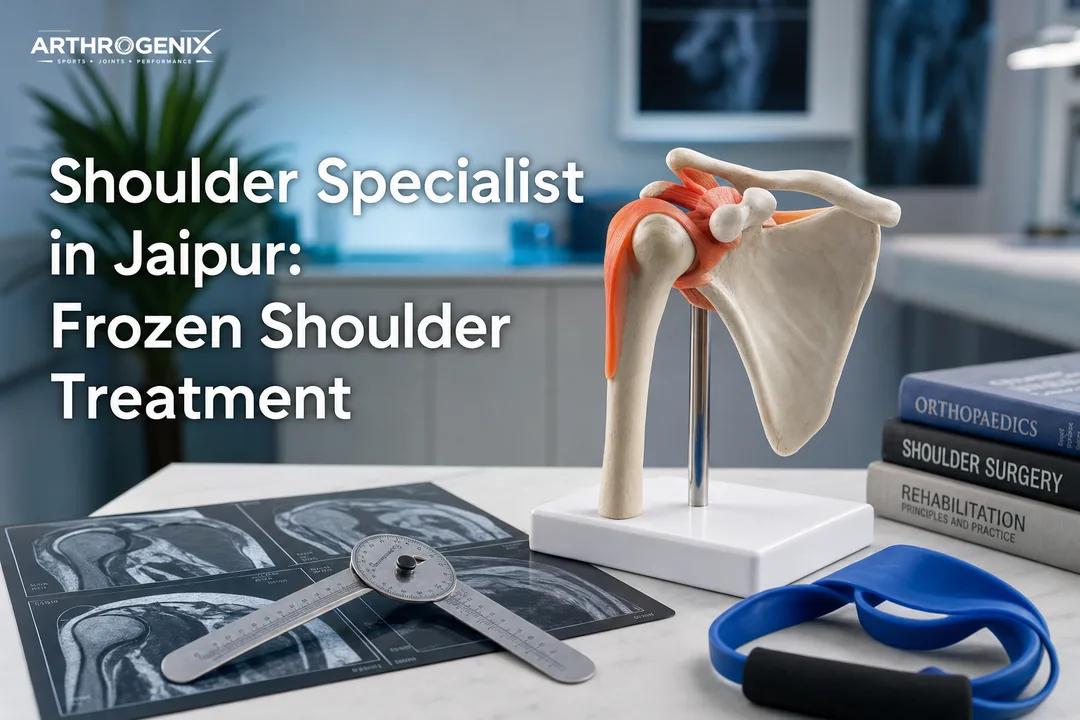
Shoulder Specialist in Jaipur: Frozen Shoulder Treatment is a common search when daily tasks start hurting. If you are looking for a shoulder specialist in Jaipur, this guide explains what frozen shoulder is, why it happens, and what evidence-based care looks like. Importantly, you will learn when home measures help and when expert assessment matters.
Why Frozen Shoulder Feels Different From Usual Shoulder Pain
Frozen shoulder, also called adhesive capsulitis, causes a deep ache plus a stubborn loss of movement. In contrast, many sports or gym injuries hurt most with a specific action. With frozen shoulder, the shoulder feels “stuck” in several directions.
Notably, the joint capsule tightens and thickens over time. As a result, both active motion (you moving your arm) and passive motion (someone else moving it) reduce. That pattern helps a clinician separate it from rotator cuff tendinopathy or impingement.
Common Symptoms You Should Not Ignore
First, pain often starts gradually and worsens at night. Next, you may notice difficulty reaching overhead or behind your back. In addition, simple activities like dressing, combing hair, or fastening a seatbelt can become frustrating.
- Night pain that disrupts sleep
- Progressive stiffness over weeks
- Loss of external rotation (turning the arm outward)
- Difficulty with grooming, lifting, and back-pocket reach
- Guarding and muscle tightness around the shoulder blade
Who Is At Higher Risk and Why It Matters
Importantly, frozen shoulder appears more often in people with diabetes and thyroid disorders. It can also occur after prolonged immobilisation, such as keeping the arm in a sling for too long. Furthermore, it sometimes follows a minor injury that initially seems harmless.
For a clear medical overview, you can review the NIAMS patient guide on frozen shoulder. That resource explains symptoms and the typical course.
Shoulder Specialist in Jaipur: Frozen Shoulder Treatment Options
Frozen shoulder management works best when it matches your stage, pain level, and functional needs. Therefore, a structured plan usually combines pain control, mobility work, and targeted strengthening. At ArthroGenix, Dr Abhishek Saxena approaches shoulder conditions with a sports-orthopaedic mindset, which helps active people return safely to work and sport.
In our day-to-day clinical work with shoulder pain treatment Jaipur patients, we repeatedly see one pattern. Many people push aggressive stretching too early. Consequently, pain flares and progress slows. A calmer, stage-appropriate plan often improves adherence and outcomes.
Stage-Based Care: Freezing, Frozen, Thawing
Frozen shoulder often moves through phases. First comes the “freezing” phase with rising pain and early stiffness. Next comes the “frozen” phase with more stiffness than pain. Finally, the “thawing” phase brings gradual return of motion.
Because of this, treatment changes over time. For example, early care focuses on pain relief and gentle mobility. Later, rehab can shift to longer holds, joint mobilisation, and strength work. Results vary depending on diabetes control, symptom duration, and how consistently you follow rehab.
What A Practical Home Plan Usually Includes
First, use heat before exercises to reduce guarding. Next, perform short, frequent mobility sessions instead of one intense session. Finally, track progress with one or two functional goals, such as back-pocket reach.
Medicines, Injections, And When They Help Most
Non-steroidal anti-inflammatory medicines may help some people, especially early on. However, pain relief alone does not restore movement. Therefore, clinicians often combine pain control with supervised physiotherapy.
Corticosteroid injections can reduce pain and improve function in selected cases, particularly in the early painful stage. For a research summary, see the NCBI Bookshelf clinical overview of adhesive capsulitis. Your doctor will weigh benefits against risks like temporary blood sugar rise in diabetes.
Importantly, not every patient needs an injection. Similarly, not every stiff shoulder is frozen shoulder. That is why a proper exam matters before deciding the next step.
Diagnosis: What A Specialist Checks Before Recommending Treatment
Accurate diagnosis prevents wasted time. Consequently, a shoulder surgeon Jaipur patients trust will first confirm that stiffness comes from the capsule and not another problem. In addition, your clinician will check the neck and shoulder blade mechanics.
During assessment, a specialist compares active and passive motion, especially external rotation. Next, they test rotator cuff strength in safe positions. If needed, they order imaging to rule out arthritis, calcific tendinitis, or a tear.
Notably, frozen shoulder is often a clinical diagnosis. Still, an X-ray may help exclude joint arthritis. Ultrasound or MRI can help when a rotator cuff injury coexists, which changes rehab planning.
Red Flags That Need Faster Review
Most stiff shoulders are not emergencies. However, certain symptoms require prompt evaluation. For instance, fever, unexplained weight loss, severe trauma, or a history of cancer needs a faster workup. Similarly, new weakness after an injury may suggest a tendon tear.
When Arthroscopy Or Surgery Becomes A Consideration
Many cases improve with non-surgical care. However, some people remain significantly limited despite months of structured rehab. In that situation, a sports orthopaedic surgeon may discuss procedural options.
First, manipulation under anaesthesia can improve range, yet it needs careful patient selection. Next, arthroscopic capsular release can target tight areas under direct vision. Because it is minimally invasive, recovery often focuses on early guided motion to prevent re-stiffening.
At ArthroGenix, Dr Abhishek Saxena also treats related conditions such as rotator cuff repair Jaipur cases and shoulder arthroscopy Jaipur injuries. Therefore, if frozen shoulder overlaps with a tear or impingement, the plan can address both issues safely.
For balanced background on typical recovery patterns, the AAOS OrthoInfo overview on frozen shoulder explains common phases and care pathways.
Choosing The Right Care Team In Jaipur And What To Expect
Frozen shoulder affects work, sleep, and mood. Therefore, you need a plan that fits your lifestyle and your medical history. A clinic that manages sports injuries and joint problems daily can coordinate diagnosis, injection decisions, and rehabilitation pacing.
When you consult, bring a brief timeline of symptoms and any prior shoulder issues. Also share diabetes or thyroid history. In addition, mention any earlier physiotherapy and what aggravated pain. That context helps an orthopaedic surgeon in Jaipur tailor your plan.
If you want to understand how a sports-focussed clinic approaches complex shoulder problems, you can explore ArthroGenix. You can also review the practice approach to sports orthopaedic care in Jaipur for athletes and working professionals.
In short, a clear diagnosis plus stage-based rehab usually leads to steady improvement. If you are searching for a shoulder specialist in Jaipur, consider booking a consultation when pain or stiffness limits daily life. As a dedicated sports orthopaedic practice, ArthroGenix focuses on evidence-based care and transparent guidance, so you can make confident decisions without pressure.