
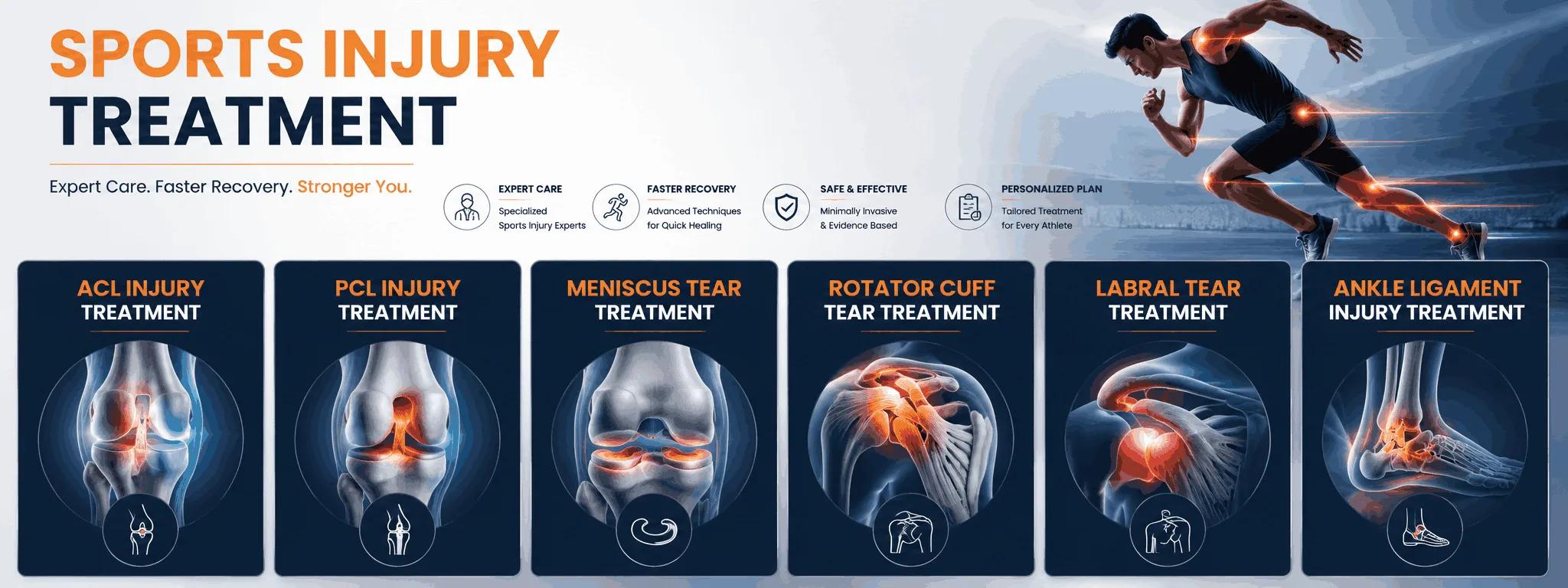
Understanding Shoulder Arthroscopy
Shoulder arthroscopy is keyhole surgery for the shoulder, using a small camera and instruments passed through incisions the size of a buttonhole. It is the modern standard for treating rotator cuff tears, labral injuries, impingement and instability.
Because the muscles are gently moved aside rather than cut, patients typically experience less pain and a smoother recovery than with traditional open surgery, while the surgeon still gets a clear, magnified view of the whole joint to make precise repairs.
Key benefits
- Buttonhole incisions with minimal muscle disruption
- Less pain and scarring than open surgery
- Often a day-care procedure
- A clear, magnified view for precise, secure repairs
When Shoulder Arthroscopy is recommended
How the procedure is performed
Anaesthesia
General anaesthesia, often combined with a nerve block that keeps the shoulder comfortable for several hours afterwards.
Access & assessment
Small portals are created and the joint is filled with fluid, giving a clear view of the rotator cuff, labrum and cartilage.
Repair
Tears are re-attached with tiny bone anchors and strong sutures, and any bony spurs or inflamed tissue causing impingement are removed.
Closure & sling
Portals are closed and the arm is rested in a supportive sling to protect the repair while it heals.
Preparation & prerequisites
- A detailed clinical assessment and review of your scans (X-ray / MRI) to confirm the diagnosis and plan the surgery precisely.
- Routine pre-operative blood tests, an ECG if needed, and a fitness-for-anaesthesia check by the anaesthetist.
- Stopping blood-thinning medication (such as aspirin or clopidogrel) only if advised, and disclosing every medicine and supplement you take.
- Fasting for around 6 hours before surgery, and arranging a responsible adult to drive you home and stay with you the first night.
- Preparing your home for recovery — ice packs, loose clothing, and a clear path free of trip hazards.
What recovery looks like
Weeks 0–4
The arm rests in a sling. Gentle assisted (pendulum) movements begin under guidance to prevent stiffness while protecting the repair.
Weeks 4–8
The sling is weaned and active movement is introduced, followed by light strengthening as the tissue heals.
Weeks 8–12+
Progressive strengthening restores power; return to overhead work and sport is staged and closely supervised.
How to recover well
- Follow the RICE principle early — rest, ice 15–20 minutes several times a day, gentle compression and elevation to control swelling.
- Take pain relief as prescribed rather than waiting for pain to build, and keep the wound clean and dry.
- Attend every physiotherapy session and do your home exercises — rehabilitation is as important as the surgery itself.
- Progress activity gradually and don't return to sport until you're formally cleared, to protect the repair.
- Watch for warning signs — spreading redness, fever, calf pain or increasing swelling — and call us if they appear.
Risks, safety & outcomes
In experienced hands this is a very safe procedure, and serious problems are uncommon. Every step is taken to minimise risk — but being fully informed is part of good care. Possible risks include:
- Temporary stiffness — reduced by starting guided movement early
- Infection or wound problems (uncommon)
- Nerve or vessel irritation around the shoulder (rare)
- A repair that needs longer rehabilitation than average in larger tears
Results & outlook
Most patients gain lasting relief of pain — especially the night pain that disturbs sleep — and, with committed rehabilitation, regain strong, comfortable, functional movement for daily life and sport.
Frequently asked questions
Usually up to four weeks, depending on what was repaired, to protect the healing tissue while gentle movement is reintroduced.