
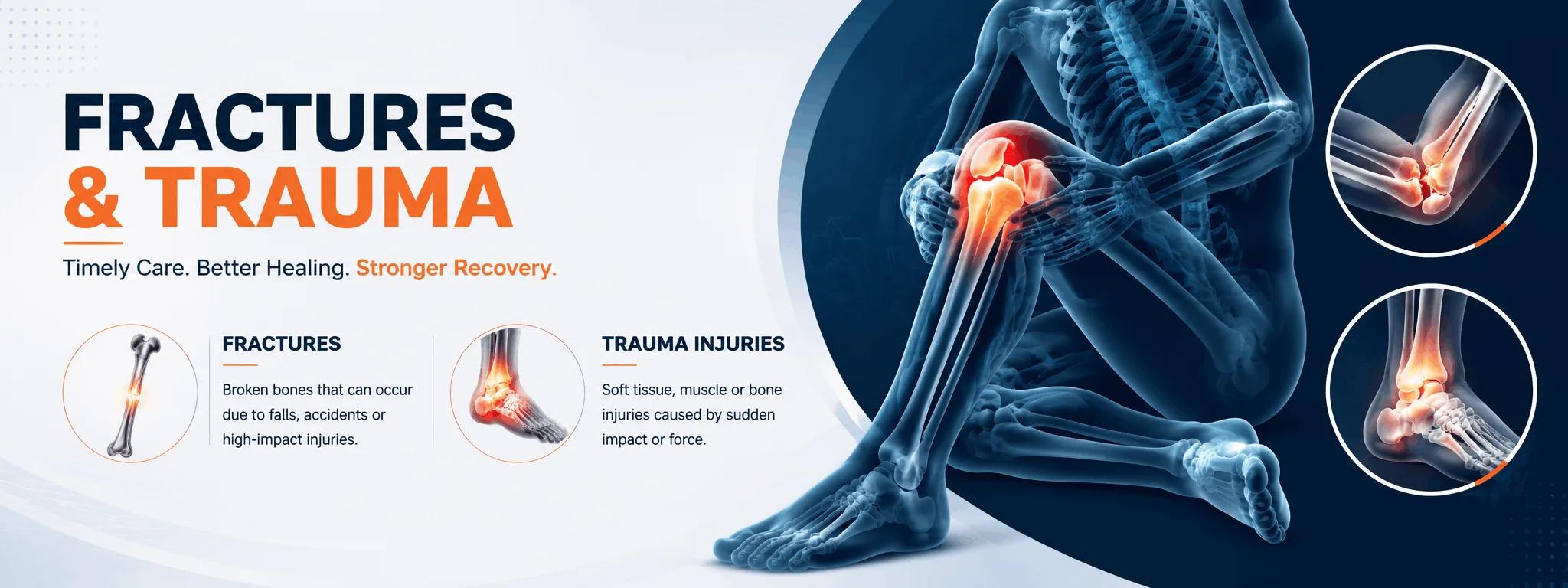
Understanding Fractures
A fracture is a break in a bone, ranging from a hairline crack to a displaced or multi-fragment break. Fractures around joints are particularly important, as accurate alignment is essential to restore smooth movement and prevent long-term stiffness or arthritis.
Some fractures heal well with immobilisation in a cast or brace, while displaced or unstable fractures need surgical fixation to hold the bone in the correct position while it heals. Prompt, expert treatment gives the best long-term result.
Symptoms to look for
Causes & risk factors
- Falls and direct impact
- Sporting and road accidents
- Weakened bone (osteoporosis) in some patients
How it's diagnosed
Clinical assessment of the injured limb and surrounding structures.
X-rays, and sometimes a CT scan, to define the fracture pattern.
What happens if it's left untreated
- Malunion (healing in a poor position) if not aligned properly
- Joint stiffness or arthritis after fractures near a joint
- Delayed healing in some fractures
How we treat it
What to expect
Fracture healing typically takes six weeks or more depending on the bone, followed by rehabilitation to restore movement, strength and function.
How to protect yourself
Frequently asked questions
No — many heal well with immobilisation. Surgery is used for displaced or unstable fractures to restore correct alignment.