
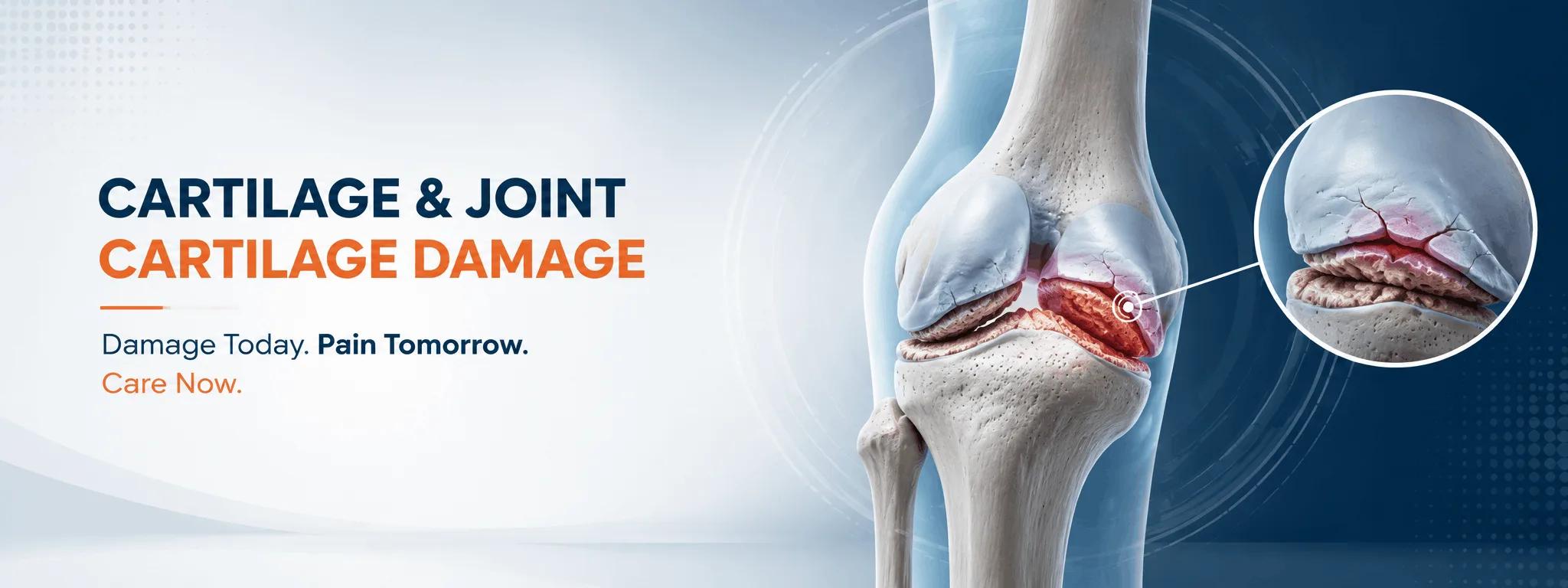
Understanding Cartilage Damage
Articular cartilage is the smooth, low-friction surface that lets joints glide painlessly. Because it has very little natural blood supply, it has a limited ability to heal, so a focal area of damage can cause ongoing pain and swelling.
Left untreated, a cartilage defect can gradually enlarge and progress towards arthritis. Treating focal damage early — with load management or keyhole repair techniques — can relieve symptoms and protect the joint's long-term health.
Symptoms to look for
Causes & risk factors
- An injury or twist to the joint
- Repetitive overload or impact
- Early wear that thins the cartilage
- Malalignment concentrating load on one area
How it's diagnosed
Clinical examination of the joint and its movement.
MRI to assess the size, depth and location of the cartilage defect.
What happens if it's left untreated
- Enlargement of the defect over time
- Progression towards established arthritis
- Ongoing swelling and reduced activity
How we treat it
What to expect
Focal cartilage damage treated early can relieve symptoms and protect the joint. Repair techniques recover over a few months as the new surface forms and matures.
How to protect yourself
Frequently asked questions
Cartilage has very limited natural healing, which is why treating focal damage early is valuable to protect the joint.