
If you are searching for a sports orthopaedic surgeon for shoulder pain, this guide, Sports Orthopaedic Surgeon in Jaipur: Rotator Cuff Repair, will help you understand what is happening inside your shoulder. Importantly, you will learn when physiotherapy may be enough and when rotator cuff repair becomes the safer route. You will also see what arthroscopy involves and how recovery usually progresses.
Why Rotator Cuff Pain Can Disrupt Work and Sport
Your rotator cuff is a set of tendons that stabilise the shoulder and help you lift and rotate the arm. When a tendon frays or tears, daily tasks start to feel risky. For example, reaching overhead, putting on a shirt, or sleeping on the affected side can become painful. Because the shoulder is a mobile joint, small tendon problems can create big functional limits.
However, not every tear needs surgery. Some people have partial tears and do well with guided rehab and activity changes. On the other hand, a larger tear, a traumatic injury, or repeated weakness may push the balance toward repair. Therefore, good diagnosis matters more than self-treatment or guesswork.
In our day-to-day work at ArthroGenix, we often see patients who ignored early pain and kept training. As a result, they adapted their movement and overloaded the neck or biceps. Next, they arrive with both pain and stiffness. That pattern is common in gym-goers, swimmers, and working professionals who spend long hours at a desk.
Common Causes We See in Active Adults
First, repetitive overhead activity can irritate the cuff and nearby structures. Second, a sudden fall on an outstretched hand can tear the tendon in one event. In addition, age-related tendon wear can weaken the fibres over time. Finally, shoulder impingement and poor scapular control can add stress with every repetition.
Notably, pain location can mislead you. Many people feel pain on the outer upper arm rather than in the shoulder joint. Because of that, they treat it like a “muscle strain” and delay care.
Symptoms That Suggest a Tear, Not Just Soreness
Look for a cluster of symptoms instead of one sign. For instance, night pain plus weakness often points to a tendon issue. Similarly, pain with lifting a kettle or combing hair can signal cuff involvement. Meanwhile, clicking or catching may occur when the tendon no longer glides smoothly.
- Weakness when lifting the arm away from the body
- Night pain, especially when lying on the affected side
- Pain that persists beyond a few weeks of rest
- Loss of active range of motion, even if someone else can move it
- Pain or weakness after a fall or sudden jerk
Importantly, symptoms vary by tear size, tendon involved, and stiffness. Therefore, two people with “rotator cuff tear” on MRI can feel very different.
Sports Orthopaedic Surgeon Assessment for Rotator Cuff Repair
A careful exam helps separate rotator cuff tears from frozen shoulder, arthritis, and biceps problems. Moreover, it guides treatment and sets realistic expectations. When you meet a sports orthopaedic surgeon, you should expect a structured history, a targeted physical exam, and imaging only when it adds value.
At ArthroGenix, Dr Abhishek Saxena typically correlates your symptoms with specific tendon tests. Next, we check scapular movement and neck screens, because shoulder pain can refer from the cervical spine. Then we discuss your sport, work demands, and timelines, since treatment must match your real life.
Imaging: When X-Ray and MRI Each Helps
An X-ray cannot show tendon tears, but it can reveal bone spurs, arthritis, or a high-riding humeral head. Therefore, it remains useful as a baseline. MRI, on the other hand, shows tendon quality, tear size, retraction, and muscle fatty change. In addition, ultrasound can be an excellent dynamic tool in expert hands.
Notably, MRI findings do not automatically mean surgery. In fact, clinical correlation is essential. The American Academy of Orthopaedic Surgeons (AAOS) overview on rotator cuff tears explains that treatment ranges from rest and therapy to surgery depending on symptoms, tear pattern, and functional needs.
Deciding Between Rehab and Surgery
First, we consider how the tear happened. A clear traumatic tear with sudden weakness often benefits from earlier repair. Second, we look at how long symptoms have lasted and whether strength is returning with therapy. Finally, we factor in your goals, such as returning to tennis, swimming, or overhead gym work.
However, there is always nuance. Some chronic tears respond well to strengthening even when MRI looks “bad.” Conversely, some small tears keep worsening due to poor tendon quality or repeated overload. Therefore, the decision should be personalised and evidence-based.
What Rotator Cuff Repair Surgery Involves
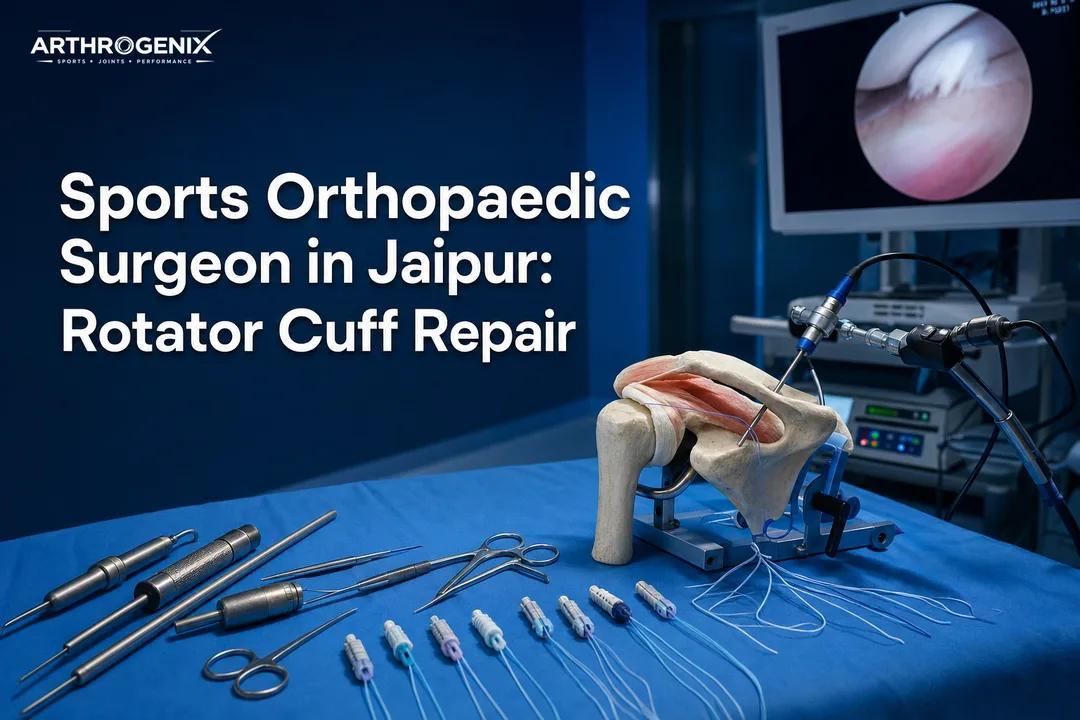
Rotator cuff repair aims to reattach the torn tendon to the bone. In many cases, surgeons use arthroscopy, which uses small incisions and a camera. As a result, patients often experience less soft tissue trauma than with open approaches. Still, the tendon healing biology remains the key limiter, not the skin incision size.
An arthroscopy surgeon Jaipur patients choose should explain technique in plain language. Typically, the surgeon cleans inflamed tissue, assesses the tear, and prepares the tendon footprint. Next, suture anchors help secure the tendon back to bone. Then the surgeon checks tendon tension and shoulder stability through a range of motion.
Arthroscopic Repair, Anchors, and Trade-Offs
Arthroscopic repair allows excellent visualisation of the joint. In addition, it can address associated issues like biceps tendon irritation or subacromial bursitis. However, complex or massive tears can require advanced patterns and careful mobilisation. Therefore, experience with shoulder arthroscopy Jaipur patients seek matters.
Why Healing Takes Time Even After a “Perfect” Repair
Tendon-to-bone healing occurs gradually. In other words, your pain may improve before the tendon becomes strong. Because of that, early overuse can risk re-tear even when you feel better. The NIH NCBI overview of rotator cuff pathology and management details how degeneration, vascularity, and tear size influence outcomes and healing timelines.
Who May Need Surgery Sooner
Some situations push toward earlier repair. For example, a young athlete with a traumatic tear and clear weakness often does better with timely fixation. Similarly, active professionals who must lift, climb, or work overhead may need a more definitive solution. Meanwhile, patients with progressive weakness despite rehab should discuss surgical options.
That said, surgery is not a guarantee. Results vary based on tendon quality, tear chronicity, smoking status, diabetes control, and rehab adherence. Therefore, a trustworthy plan includes both benefits and limits.
Recovery After Rotator Cuff Repair: What to Expect
Recovery combines protection and progressive loading. First, you protect the repair so the tendon can heal. Next, you restore motion safely. Finally, you rebuild strength and endurance for work and sport. A good plan balances caution with consistent progress.
Most patients use a sling initially. However, you still move the elbow, wrist, and hand to reduce stiffness. In addition, supervised physiotherapy usually starts early with guided, safe movements. Consequently, the shoulder regains mobility without stressing the repair.
A Practical Rehab Timeline (General Guide)
Timelines vary by tear size and fixation quality. Still, many protocols follow common phases. Therefore, this outline helps you plan, while your surgeon and physiotherapist tailor details.
- Protection phase: sling use with gentle passive motion as advised
- Mobility phase: gradual active-assisted then active range of motion
- Strength phase: rotator cuff and scapular strengthening with control
- Return-to-sport phase: sport-specific drills and endurance work
Meanwhile, pain control should rely on a layered approach. For instance, icing, sleep positioning, and prescribed medications can help. Additionally, guided exercises often reduce pain by improving mechanics.
Importantly, do not rush overhead lifting. Even if daily pain drops quickly, tendon strength lags behind. Because of that, we emphasise milestones, not dates, during follow-ups.
Choosing the Right Surgeon and Next Steps in Jaipur
Choosing the right doctor involves both skill and communication. First, look for a shoulder specialist Jaipur patients trust for arthroscopy and sports injuries. Second, ask how the surgeon decides between rehab and surgery. Third, confirm that the clinic supports structured rehabilitation and follow-ups.
If you want to explore options, you can learn more about ArthroGenix and its approach to sports injury treatment Jaipur patients seek. In addition, you can review services and guidance through the Jaipur sports orthopaedic practice resources to prepare for your consultation.
When patients come to us after weeks of shoulder pain, we focus on clarity. We explain what the MRI means and what it does not mean. Then we map a plan that fits your work, sport, and recovery capacity. That practical decision-making is often what patients value most.
In conclusion, Sports Orthopaedic Surgeon in Jaipur: Rotator Cuff Repair matters because the right diagnosis and timing can protect long-term shoulder function. If you need a sports orthopaedic surgeon to evaluate persistent weakness, night pain, or a post-injury shoulder, consider booking a consult for a balanced opinion. We are a focused sports orthopaedic and joint care team, and we base recommendations on examination, imaging, and your goals, not on one-size-fits-all rules.