
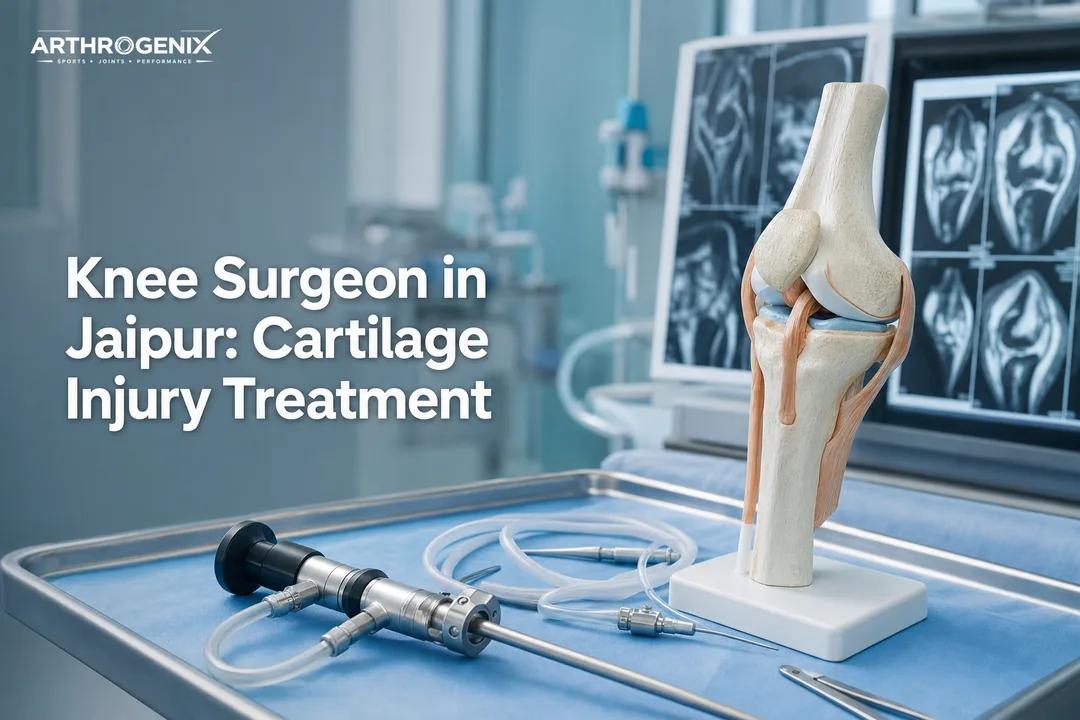
If you are searching for a sports orthopaedic surgeon and comparing options for “Knee Surgeon in Jaipur: Cartilage Injury Treatment Options,” this guide will help you make sense of the choices. Cartilage damage can feel confusing because pain may come and go. However, the underlying wear or defect can progress if you ignore it. Here you will learn how surgeons evaluate cartilage injuries, what treatments exist, and what recovery often involves.
Why Cartilage Injuries Hurt And How They Progress
Cartilage covers the ends of bones and helps the knee glide. Importantly, it has limited blood supply. Because of that, cartilage heals slowly compared with muscle or skin. As a result, small defects can become larger with repeated impact.
Many people in Jaipur first notice pain while climbing stairs, squatting, or after a long walk. However, swelling after activity can be the key clue. In addition, some patients describe catching or a “gritty” sensation that suggests surface damage.
Common Causes We See In Active Knees
In our day-to-day work at ArthroGenix, we often see cartilage injuries after a twist during football, badminton, or a sudden slip on stairs. Similarly, we see them with long-standing alignment issues or after an old ACL injury. Notably, a meniscus tear can also increase cartilage stress. Therefore, we always assess the full joint, not only the painful spot.
Cartilage damage can be traumatic or degenerative. For example, a single impact can create a focal defect. On the other hand, gradual thinning can occur with early osteoarthritis. Because the treatment goals differ, accurate diagnosis matters.
How Doctors Confirm A Cartilage Problem
First, your orthopaedic doctor will take a careful history and examine stability, alignment, and joint-line tenderness. Next, X-rays help check arthritis, bone shape, and limb alignment. However, X-rays cannot directly show cartilage quality.
Therefore, MRI often guides decision-making because it can show cartilage surfaces, bone bruising, and meniscus health. In addition, diagnostic arthroscopy may confirm the exact size and location of a defect. Importantly, arthroscopy also allows treatment in the same sitting when appropriate.
Sports Orthopaedic Surgeon Approach To Knee Evaluation
When a sports orthopaedic surgeon evaluates cartilage injury, the focus goes beyond pain control. Instead, the aim is to match the treatment to your defect type, your activity level, and your timeline. Consequently, a runner, a working professional, and a senior patient may receive different plans even with similar MRI findings.
At ArthroGenix, Dr Abhishek Saxena reviews three practical questions early. First, is this a small focal defect or diffuse wear. Second, does the knee have instability like an ACL problem. Third, does alignment overload one compartment. Because if we miss those drivers, symptoms often return.
Key Factors That Decide The Best Option
Several variables influence the plan. Moreover, they help predict the likelihood of symptom improvement with each technique. In particular, surgeons consider:
- Defect size and depth (partial-thickness vs full-thickness)
- Location (weight-bearing femur, patella, trochlea)
- Age and activity goals (sports return vs daily comfort)
- Stability and meniscus health (ACL/PCL and meniscus support)
- Alignment and body load (varus/valgus patterns)
Importantly, cartilage treatment is not “one surgery fits all.” Results also vary based on rehabilitation quality and how well you protect the repair during early healing. Therefore, clear counseling matters as much as the procedure.
Why Fixing Ligaments And Meniscus Often Comes First
If an ACL is torn, the knee can shift during cutting movements. As a result, cartilage gets repeated shear forces. Similarly, a damaged meniscus reduces shock absorption. Therefore, an ACL reconstruction Jaipur plan or a meniscus repair Jaipur plan may be combined with cartilage work, or done first, depending on the case.
Knee Surgeon in Jaipur: Cartilage Injury Treatment Options
A knee surgeon in Jaipur may recommend non-surgical care, minimally invasive arthroscopy, or cartilage restoration procedures. The best choice depends on symptoms, defect anatomy, and your expectations. Furthermore, the goal may be pain relief, function improvement, or joint preservation for the long term.
Below are commonly used options in sports medicine Jaipur settings. However, your surgeon will personalize the plan after imaging and examination.
Non-Surgical Care For Early Or Mild Defects
First, many cartilage problems respond to load management and targeted rehab. For example, strengthening the quadriceps and hip muscles can reduce joint stress. In addition, weight optimization can lower compressive forces across the knee.
Doctors may suggest short courses of anti-inflammatory medicines when appropriate. Similarly, some patients benefit from supportive braces or taping for patella tracking issues. Importantly, a structured physiotherapy plan often matters more than any single medication.
Injections can also play a role for selected patients. For instance, hyaluronic acid aims to improve lubrication in some arthritic knees. On the other hand, biologic injections such as PRP have mixed evidence across indications. Therefore, discuss realistic expectations and costs before choosing them.
Arthroscopy Procedures That Treat Mechanical Symptoms
When swelling and catching persist, knee arthroscopy Jaipur options can help. During arthroscopy, the surgeon inserts a small camera and instruments through tiny portals. Consequently, recovery can be faster than open surgery in many cases.
Depending on the findings, surgeons may perform chondroplasty, which smooths unstable cartilage flaps. In addition, they may remove loose bodies that cause locking. However, smoothing does not “regrow” cartilage, so it suits select defects and goals.
Cartilage Restoration For Focal Full-Thickness Lesions
For deeper focal defects, surgeons may consider restorative techniques. One widely used method is microfracture. In microfracture, the surgeon makes small holes in the underlying bone to stimulate a healing response. As a result, fibrocartilage can fill the defect, although it differs from native hyaline cartilage.
For some patients, osteochondral grafting transfers cartilage and bone plugs to the damaged area. Additionally, advanced options such as autologous chondrocyte implantation exist in certain contexts and centers. Because availability and cost vary, your surgeon will explain what fits your knee and your setting.
Notably, peer-reviewed reviews describe microfracture as most suitable for smaller defects and with careful rehab. You can explore a detailed overview on NCBI’s StatPearls microfracture knee article. That resource also explains indications and limitations.
Recovery, Rehab, And When To Seek A Specialist
Recovery depends on the procedure, defect size, and your sport demands. Therefore, two people can have the same MRI but very different timelines. In general, cartilage procedures require patience because cartilage adapts slowly. As a result, “feeling better” early does not always mean the tissue can handle impact.
In our experience managing athletes and busy professionals, the best outcomes come when rehab starts early and stays consistent. Moreover, patients who understand weight-bearing restrictions protect their repairs better. That discipline often decides long-term comfort.
What A Good Rehab Plan Usually Includes
First, you need pain and swelling control. Next, you restore range of motion without irritating the joint. Then, you rebuild strength, balance, and movement patterns. Finally, you progress to sport-specific drills when the knee tolerates load.
Most surgeons use criteria-based progressions rather than fixed dates. For example, swelling-free walking and good single-leg control matter before jogging. In addition, proper landing mechanics reduce re-injury risk. For broader context on knee conditions and arthritis progression, see AAOS OrthoInfo on knee osteoarthritis, which explains joint changes and symptom patterns.
Red Flags That Mean You Should Not Wait
Sometimes, cartilage injury overlaps with ligament injury treatment or meniscus tears. Therefore, do not delay assessment if symptoms escalate. Seek evaluation from an orthopaedic surgeon in Jaipur if you notice:
- Repeated swelling after light activity
- Locking, catching, or sudden giving way
- Night pain or pain that limits sleep
- Inability to fully bend or straighten the knee
- New instability after a twist or fall
Importantly, these signs do not always mean surgery. However, they do justify a clear diagnosis plan.
If you want a focused assessment with a joint-preservation mindset, you can connect with ArthroGenix for evidence-based sports injury treatment Jaipur patients rely on. You can also review Dr Abhishek Saxena’s approach on the Jaipur sports orthopaedic clinic website and bring your MRI for discussion.
To close, “Knee Surgeon in Jaipur: Cartilage Injury Treatment Options” is not about choosing the most complex procedure. Instead, it is about choosing the right step for your knee today, and protecting your joint for tomorrow. As with any medical decision, results vary with defect type, alignment, and rehab effort. If you would like, a sports orthopaedic surgeon can explain the pros and cons in plain language and help you plan a safe return to activity.
This article reflects practical clinical patterns seen in sports orthopaedic practice and is designed to stay useful as techniques evolve. It does not replace an in-person exam and imaging review.
For additional background on cartilage structure and injury concepts, you can also explore a PubMed Central review on articular cartilage repair, which discusses mechanisms and options across procedures.